The government has repealed the Vagrancy Act, ending legislation that for more than two centuries allowed rough sleeping and begging to be treated as criminal matters in England and Wales.
The repeal has been welcomed by homelessness charities and campaigners, who have long argued that vulnerable people should not be fined, prosecuted or pushed through the criminal justice system because they have nowhere safe to go. Ministers say the change marks a shift away from punishment and towards support.
The issue is more complicated than simply saying “homelessness was illegal”. The Vagrancy Act did not make a person criminal merely for lacking a home. It created offences around rough sleeping and begging in certain circumstances, including sleeping in the open air or other places while having no visible means of support and failing to give a satisfactory account. In practice, that gave police and local authorities a legal route to move people on or apply pressure where rough sleeping, begging or street disorder became persistent.
That is why repeal has two sides. Homeless people should not be treated as criminals simply because they are destitute. If the old legal route disappears, the replacement must be stronger support, not official indifference. The aim should be to help people back into society, not leave them in doorways with fewer consequences for everyone else.
What Changes Now?
With the Vagrancy Act repealed, people should no longer face action under that old framework for rough sleeping or begging alone. The government says new powers will focus on genuine criminality and antisocial behaviour, including organised begging, trespassing with criminal intent and behaviour that causes harm.
In principle, that distinction is sensible. There is a clear difference between someone sleeping in a doorway because they have nowhere else to go and organised exploitation, aggressive intimidation, theft, drug dealing, criminal damage, or threatening behaviour.
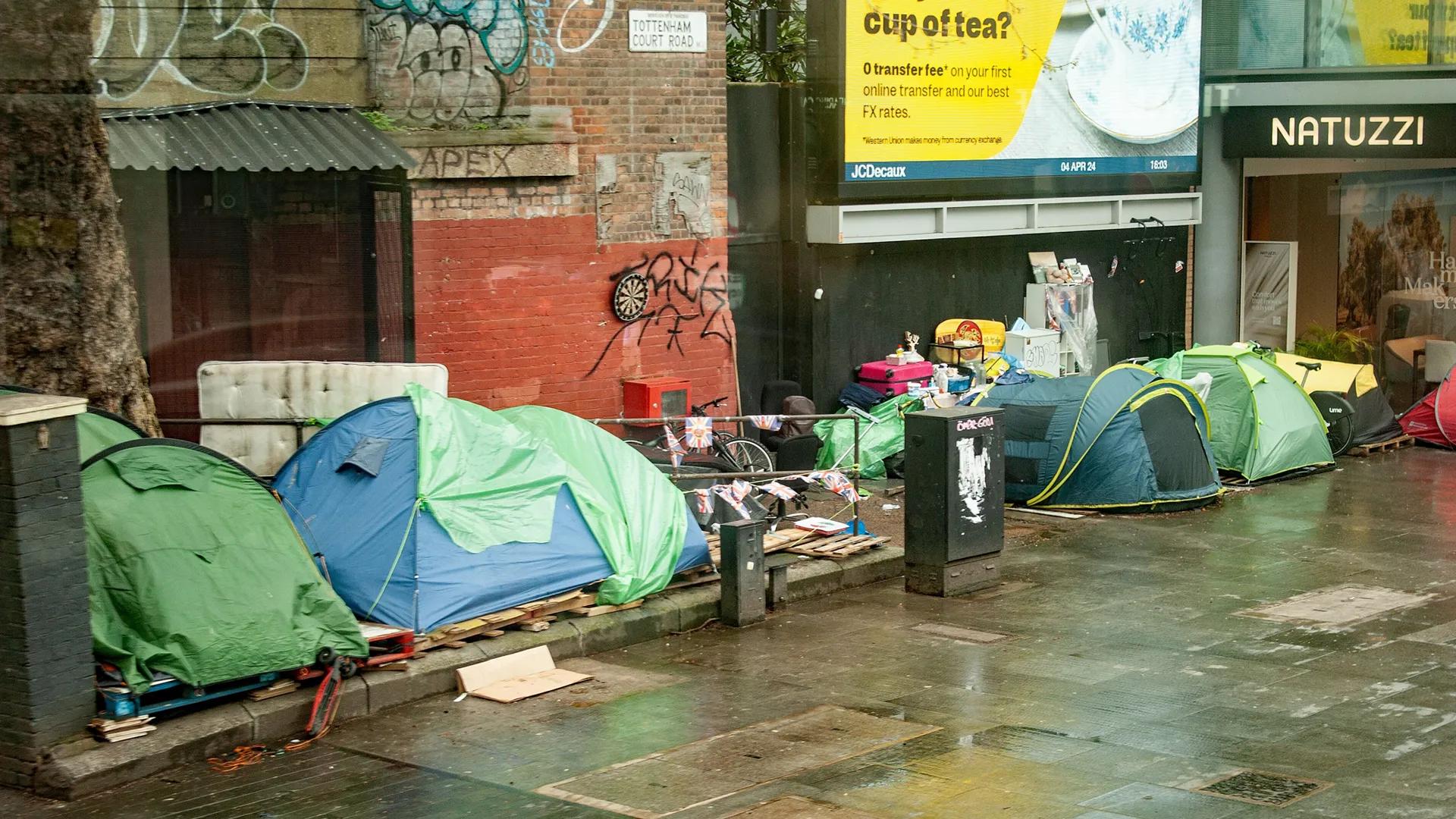
The problem is the grey area. What happens when someone refuses repeated offers of accommodation? What happens when tents grow into semi-permanent camps? What happens when a doorway, park, subway, car park or town centre becomes unsafe, blocked, dirty or impossible for others to use? What happens when someone’s addiction or mental health crisis means they are both vulnerable and causing serious problems around them?
If the answer is only “offer support”, then the support has to be real. If the support does not exist, is not safe, or is refused again and again, councils and police will be left managing the visible symptoms without the old legal lever.
The Street Does Not Change Overnight
Rough sleeping in England remains high. Official figures estimated 4,793 people sleeping rough on a single night in autumn 2025, up from 4,667 the previous year and the highest level recorded in the series.
That figure is only a snapshot. It does not include everyone in temporary accommodation, sofa-surfing, hidden homelessness, overcrowded housing, unsafe housing, or people moving between short-term arrangements and the street.
Someone sleeping rough may be dealing with far more than the absence of a bed. Addiction, mental health problems, trauma, debt, prison release, domestic abuse, family breakdown, immigration issues and distrust of authorities can all sit behind one person’s presence in a doorway.
The people most in need of help are often the least able to navigate the systems designed to provide it. Repeal alone is not a homelessness policy.
Britain Must Avoid the Encampment Trap
Britain should look carefully at parts of the United States, especially cities such as Los Angeles and San Francisco, where visible homelessness and tent encampments have become major civic problems.
The comparison is not exact. Britain has different laws, different housing systems and different welfare structures. The warning is still useful. In large American cities, encampments have often become the point where humanitarian failure, public disorder, addiction, crime, sanitation problems and political paralysis meet.
Local authorities then face a miserable choice: clear camps and be accused of cruelty, or leave them in place and watch public spaces become unsafe and degraded.
Encampments are not good for homeless people. They can expose people to theft, violence, exploitation, drug markets, poor sanitation, fire risk and worsening health. They are not good for communities either. Residents and businesses can face blocked pavements, litter, intimidation, antisocial behaviour, drug use, fire hazards and loss of access to public spaces.
This is the danger for Britain. If rough sleeping is no longer criminalised, without enough routes into safe accommodation, treatment and long-term support, the pressure does not disappear. It settles somewhere: a park, a station entrance, a high street, an underpass, a car park, a tent cluster or a hidden camp.
Repeal without capacity risks importing the worst lesson from American cities: visible homelessness becomes normalised because the system has neither the authority nor the support network to resolve it.
Help Has to Be Real, Not Theoretical
The government is right that homelessness should not be treated primarily as a crime. Telling people they are no longer criminals still does not give them somewhere to sleep.
The real test is whether someone on the street can actually access meaningful help when they need it. That means emergency accommodation that is safe, not just technically listed. It means mental health and addiction support that can be reached before someone hits crisis. It means councils having the funding and legal clarity to act quickly. It means routes out of rough sleeping that do not collapse after a few nights in a hostel.
It also means being honest that some people will refuse help. That may be because of trauma, addiction, mental illness, fear of hostels, previous bad experiences, conditions attached to support, or simply because life on the street has become the only system they understand.
A serious homelessness policy must deal with that reality, not pretend that a referral form is enough. If the state removes enforcement without strengthening outreach, treatment, accommodation and safeguarding, the result will not be compassion. It will be abandonment with nicer language.
Getting People Back Into Society
The goal should not be to punish homelessness. It should be to end it where possible, manage it where necessary, and stop people being abandoned in public spaces until their lives collapse completely.
That requires more than emergency beds. It requires a route back into normal life: stable accommodation, addiction treatment, mental health support, help with documents, bank accounts, benefits, work, training, family reconnection where safe, and long-term follow-up. For some people, it may require supported housing rather than simply placing them in temporary accommodation and hoping they cope.
This is where Britain often fails. The system can be difficult even for a stable person to navigate. For someone sleeping rough, traumatised, addicted, mentally ill or cut off from family, it can be almost impossible. Repeal only works if the state becomes more active, not less.
If the Vagrancy Act was a blunt tool, the replacement has to be a better one. Not a shrug. Not an excuse. Not a policy that allows tents to spread while officials say the criminal law no longer applies.
The Repeal Is Historic, Not Enough
The repeal of the Vagrancy Act is a major legal change. It removes a criminal route that many believed punished visible poverty instead of solving homelessness. It also removes a mechanism that, at least in theory, placed pressure on authorities and individuals to deal with rough sleeping rather than allow it to become permanent.
That part of the debate should not be ignored. The law may have been old and badly fitted to modern homelessness, yet the impulse behind intervention cannot simply vanish. Britain still needs a way to get people off the streets, protect vulnerable individuals, stop public spaces deteriorating and deal with cases where support is refused or criminal behaviour gathers around homelessness.
The old answer was criminalisation. That answer was flawed. If the new answer is simply to remove the law and hope support systems cope, then Britain has not solved anything. It has only taken away one tool before proving the replacement works.
The end of the Vagrancy Act answers one question: should rough sleeping and begging be handled through a 200-year-old criminal law?
The answer is no.
The harder question remains: if the state no longer uses criminal law to move people off the streets, what power, support and responsibility will it use instead?